Cancel culture involves a celebrity or public figure sharing a statement that offends the public and results in public backlash. This leads to celebrities becoming socially blocked from keeping their media platforms or career.
Cancel culture to a great extent does impact freedom of speech, because this harsh social system can make individuals feel insecure to voice their opinion due to the possibility of being publicly critized on the media.
Dr. Jill McCorkel, Professor of sociology and criminology at Villanova University states, “Cancel culture is an extension of or a contemporary evolution of a much bolder set of social processes that we can see in the form of banishment… “[They] are designed to reinforce the set of norms.” Highlighting that the origins of cancel culture have been exposed throughout history, suggesting people have always been punished for pushing boundaries within social norms and cancel culture is an alternative of that.
A statement made from Vox.com emphasises how cancel culture can be injurious on a person, highlighted in… “…publicly calling for accountability, and boycotting…has become an important tool of social justice — a way of fighting, through collective action, some of the huge power imbalances that often exist between public figures with far-reaching platforms and audiences, and the people and communities their words and actions may harm.”
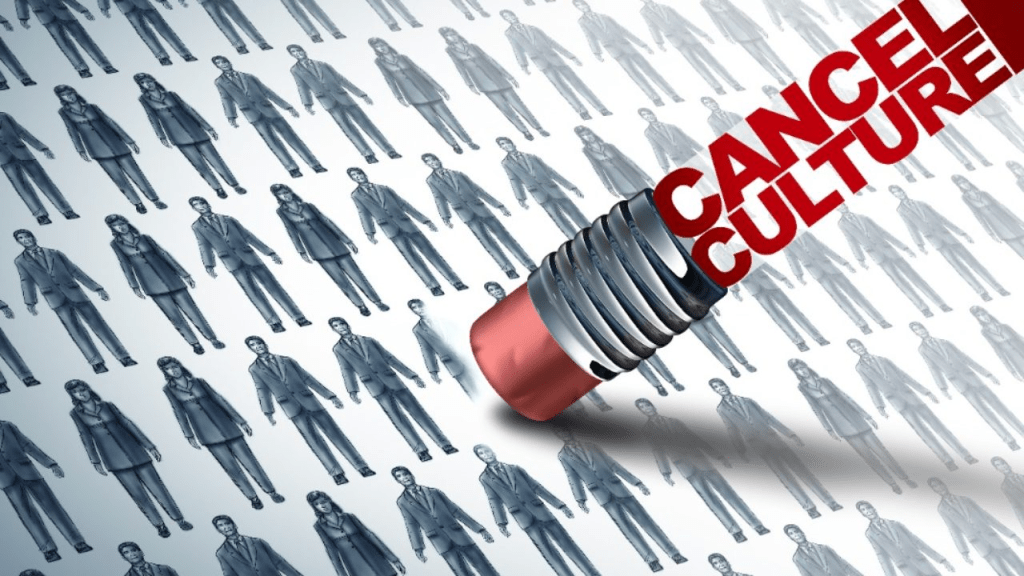
Politicians and specialists argue cancel culture is a form of bullying, spiralling out of control instead of being a way to respectfully highlight the mistake the individual had made.
Some people could also supposedly refer to cancel culture as a type of “celebrity hunting season”. Asserting past the moral boundaries in society can lead to ruining of professions, which can be seen as quite extreme depending on the reasoning behind the scenario.
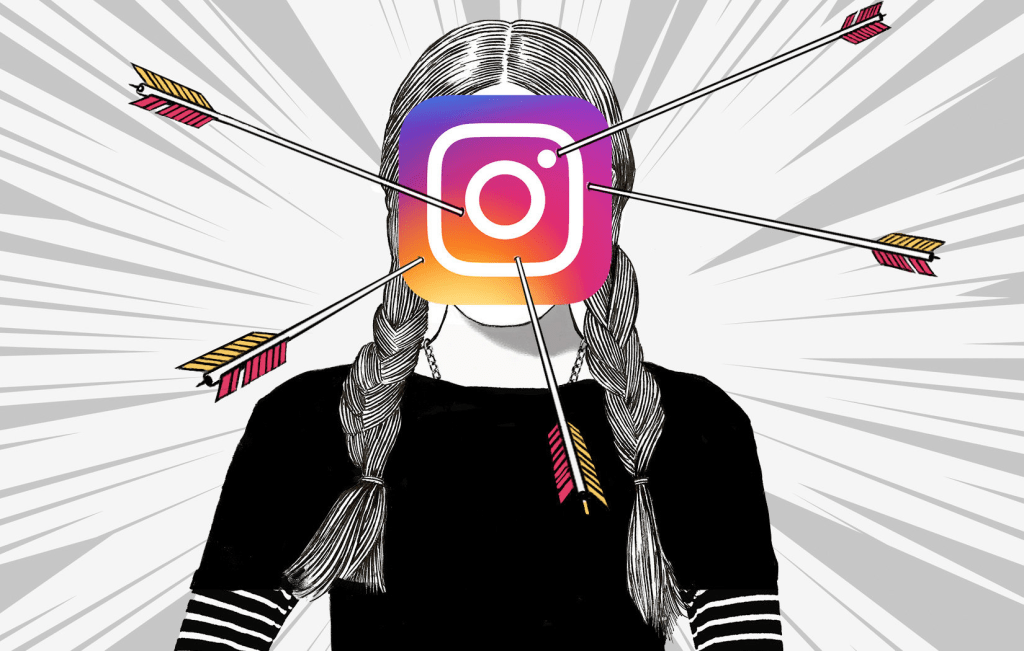
People need to ask themselves – does cancel culture play an important role in social justice or is it a form of bullying that impacts freedom of speech?
Aaron Rose, a corporate diversity, and inclusion consultant articulates how cancel culture doesn’t provide encouragement to move positively forward, instead it leaves people feeling afraid. This is highlighted in, “…those tactics created change…but eventually realized that I was not seeing the true change I desired. … We were still sad and mad. And the bad people were still bad. And everyone was still traumatized…create more stories of transformation rather than stories of punishment and excommunication.”
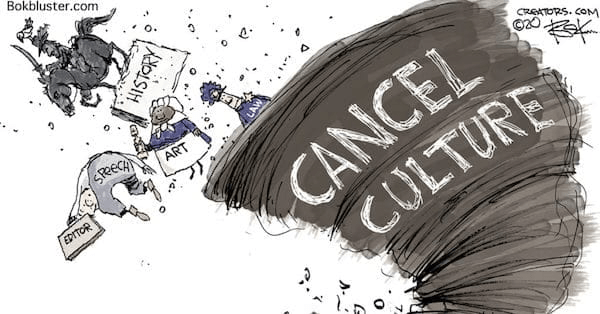
A statement made from Conversation.com further highlights how cancel culture restricts freedom of speech, “…cancel culture curtails speech. It threatens this longstanding fundamental freedom. If we limit speech by cancelling those we disagree with, other societal pillars also face peril. When expression is compromised, which freedom is next? Freedom of assembly? Freedom from fear?”
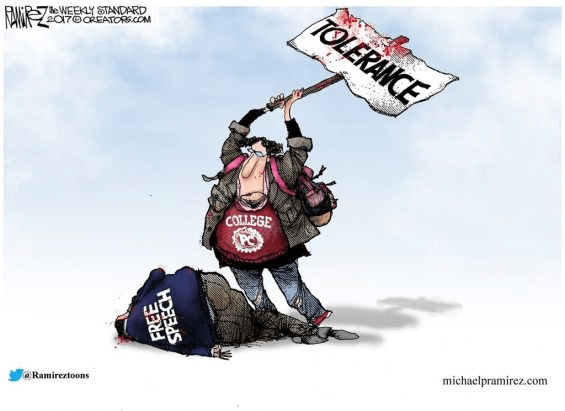
Haper’s magazine assigned an open letter signed by 150 high-profile authors such as JK Rowling and Margaret Atwood, emphasising how “open debate and toleration of differences” are under attack. These high-profile authors debate how there is a lack of open discussion within social norms resulting from cancel culture.
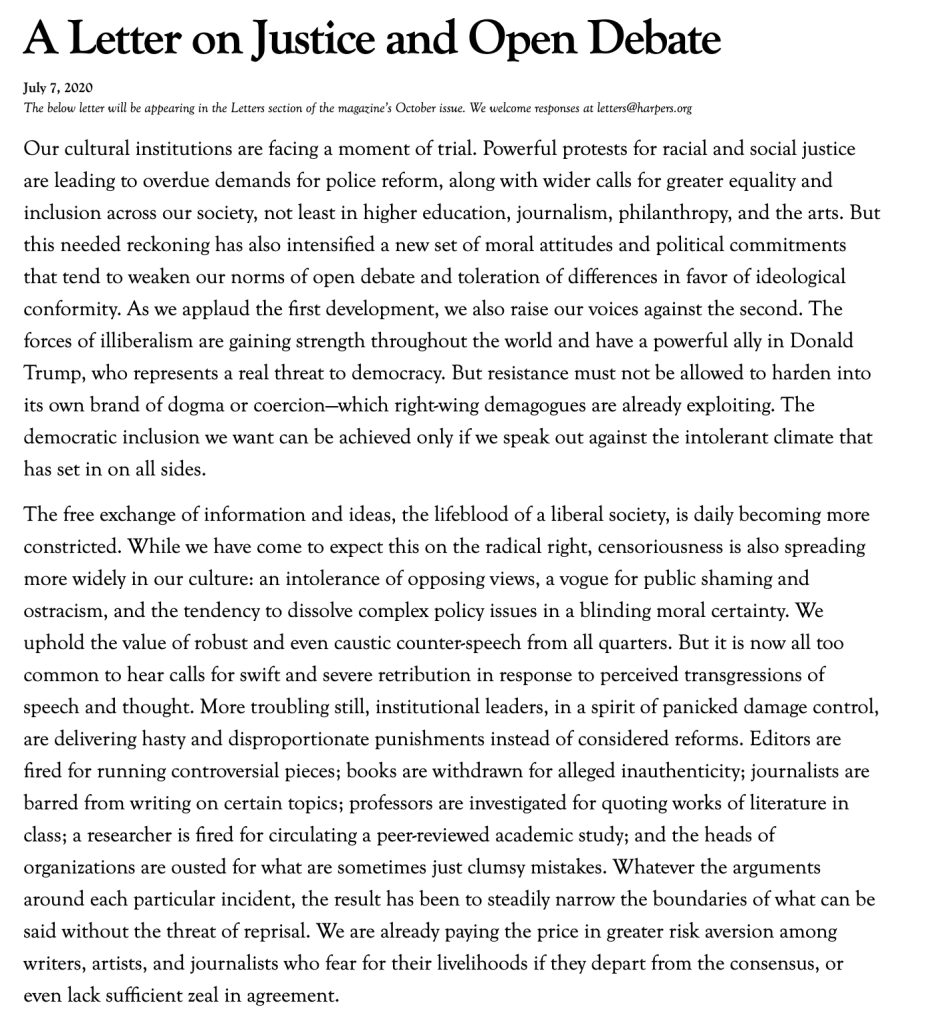
In the letter it highlights when cancel culture is appropriate for usage which involves when the statement is; “morally wrongful, gravely offensive…can lead to worrying consequence for an individual…”
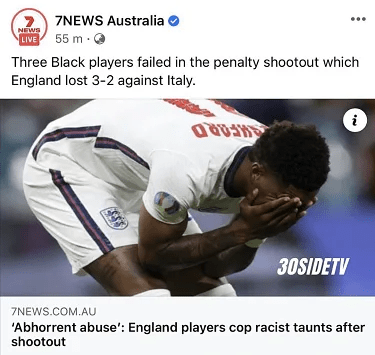
If any of these judgements are presented in the media, it would feel almost ‘obligatory’ to act against the wrongdoer. For example, there are some speeches that don’t deserve any careful consideration on how to tell that person they are wrong, they simply are. This can be statements that involve racial slurs. An example of this is shown in the image below.
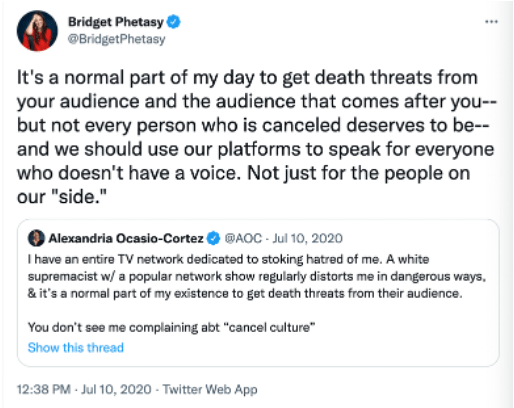
However, other reasoning behind cancelling someone from something they shared that doesn’t include the judgements, is when cancel culture is considered harsh and impacts freedom of speech. Death threats can also be resulted from cancel culture, which is when it becomes serious.
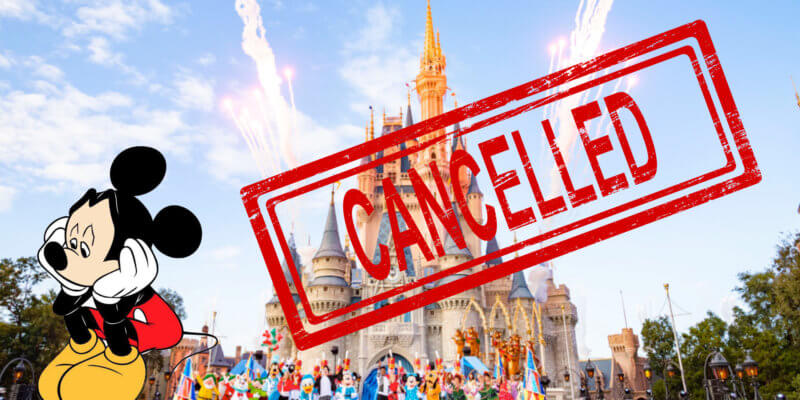
A victim of cancel culture is Disney where they were ‘cancelled’ for creating racist imagery shown in Dumbo, Peter Pan, Swiss Family Robinson and the Aristocrats. Children younger than 7 were banned from watching those movies. An example of racist imagery is in Dumbo where the characters contained characters shown to, “pay homage to racist minstrel shows, where white performers with blackened faces and tattered clothing imitated and ridiculed enslaved Africans on Southern plantations.”
Similarly, six of Dr Suess’s books were banned from publication because of apparent racist insensitivity. Portrayals of Asian and Black characters were exposed in his books.
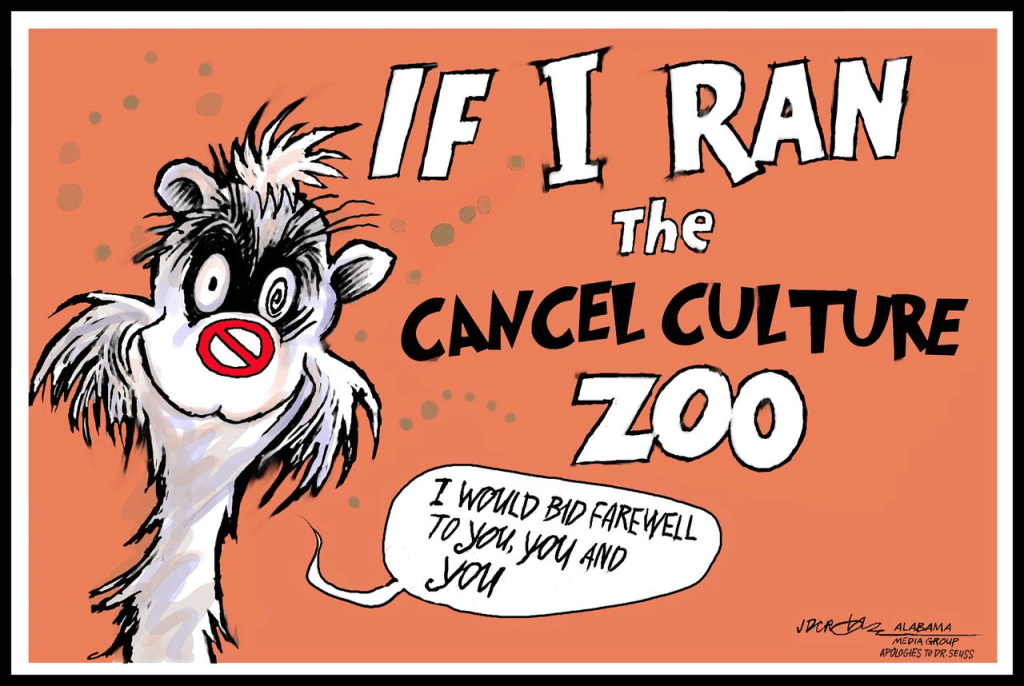
Another example of cancel culture is Cardi B, who was cancelled for defending her fiancé’s homophobic lyrics in song. The use of ‘queer’ was supposedly misinterpreted, as Migos claimed he didn’t mean it as someone’s who was ‘gay,’ but used it as a replaced word for ‘strange’/ ‘odd.’ Cardi B agreed and further highlighted how she had never seen Migos mistreat members of the LFBT community before.
Ultimately, cancelling only highlights the bad in someone. Whereas, being told you’re is wrong is different. This allows for discussion from both sides to thoroughly understand each other’s viewpoints and move forward. Jenna Arnold who is an activist and author suggests a positive alternative to cancel culture, which could result in the continuation freedom of speech, highlighted in, “instead of calling people out, we must start calling them in.” Doing this may allow people to still feel like they can voice their opinions on the media and if people don’t agree with it, they will be told but in a way that’s more subtle. Thus, allowing freedom of speech and cancel culture to both exist in a better light. She further states, “…progress will not be achieved through silencing either party, whether that’s ‘cancelling’ someone, or by dismissing one’s right to criticise. Being told you’re wrong is not the same as being deleted. It’s time to listen, process and move forward.” This adds on the idea of stopping cancel culture and instead allowing listening to both parties to be a normality.
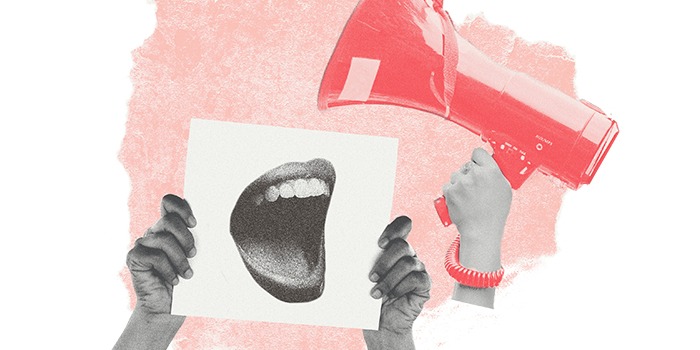
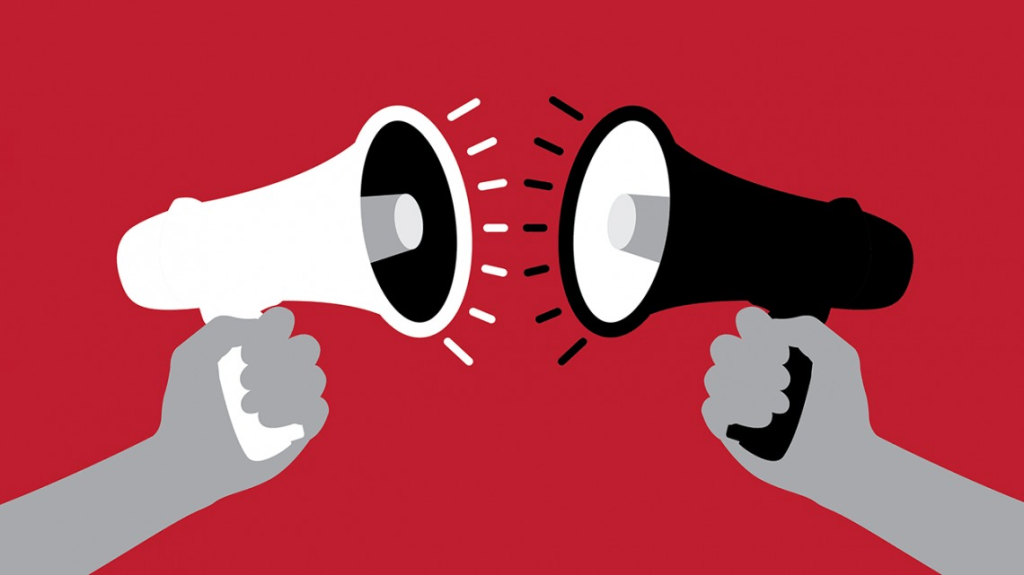
Overall, cancel culture does impact freedom of speech to a great extent, as it completely rejects anyone who shared a statement that the public do not agree with. In contrast, the normality should be listening to both the offender’s and public’s sides to come to an agreement on how to move forward positively. Thus, by doing this, freedom of speech would not be so impacted.
Referencing
Aja Romano (2020), ‘Why we can’t stop fighting about cancel culture’, Vox, viewed 27th March 2022, https://www.vox.com/culture/2019/12/30/20879720/what-is-cancel-culture-explained-history-debate
Brooke Kato (2021), ‘What is cancel culture? Everything to know about the toxic online trend’, news.com.au, viewed 29th March 2022, https://nypost.com/article/what-is-cancel-culture-breaking-down-the-toxic-online-trend/
Deandrea Chavis (2022), ‘The impact of “cancel culture” on art’, The Counter Balance, viewed 31st March 2022, https://www.thecounterbalance.org/articles/the-impact-of-cancel-culture-on-art gclid=Cj0KCQjw3IqSBhCoARIsAMBkTb0FqDEFA2QyxQt4NQOsTkZB2vXDFMrH7hLjhDGtAcCwjIrtzq8g6HkaAkbSEALw_wcB
Dino Sossi (2021), ‘Can we cancel ‘cancel culture?’’, The Conversation, viewed 19th March 2022, https://theconversation.com/can-we-cancel-cancel-culture-164666
Ella Alexander (2020), ‘Cancel culture: a force for good or a threat to free speech?’ Harper’s Bazaar, viewed 27th March 2022, https://www.harpersbazaar.com/uk/culture/a33296561/cancel-culture-a-force-for-good-or-a-threat-to-free-speech/
Hugh Breakey (2020), ‘Is cancel culture silencing open debate? There are risks to shutting down opinions we disagree with’, The Conversation, viewed 30th March 2022, https://theconversation.com/is-cancel-culture-silencing-open-debate-there-are-risks-to-shutting-down-opinions-we-disagree-with-142377
 allegraslovitt.com